
How much protein does a child need in New Jersey. Protein literally is “building blocks” of life that repair cells and make new one. Whether you like it or not, your kids, teens, and even adults need protein every day. The question is how much you need a day.
But what protein really is? Why does it matter? Why U.S. Department of Health and Human Services Secretary Robert F. Kennedy, Jr. and U.S. Department of Agriculture Secretary Brooke Rollins released a guideline about protein intake? What will happen if you are protein deficient? What will happen if you take too much of it? What is the best or safe source of protein with no compromises? What are amino acids?
What is a protein
The word protein comes from the Greek word proteios, which means “primary,” “first,” “in the lead,” or “of the prime importance.”
Technically, protein is among of the PRIMARY needed macronutrients along with fats and carbs – National Center for Biotechnology Information
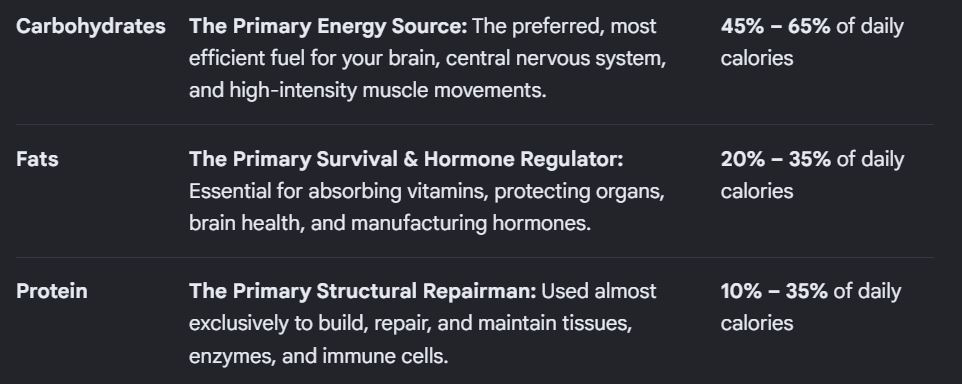
Carbon (C): ~50% to 55%
Oxygen (O): ~21% to 24%
Nitrogen (N): ~15% to 17% (This is unique to proteins compared to fats and carbs!)
Hydrogen (H): ~6% to 7%
Sulfur (S): ~0.2% to 2% (Found in specific amino acids like cysteine)
The exact average of 16% nitrogen content in animal, nut, and grain tissues is explicitly detailed by the Food and Agriculture Organization (FAO). This 16% constant is why scientists worldwide multiply total food nitrogen by a factor of 6.25 to calculate its exact protein content.
The exact atomic anatomy of the 20 amino acid side chains and the core polypeptide backbone is comprehensively mapped in the peer-reviewed textbook Molecular Biology of the Cell, available through the NCBI Bookshelf.
What is Amino Acid
Amino acids are the tiny bricks that snap together to build a protein!
“Amino” comes from the amino group (\(-NH_{2}\)), which is a nitrogen atom bonded to hydrogen.
“Acid” comes from the carboxylic acid group (\(-COOH\)), which gives the molecule its acidic properties.
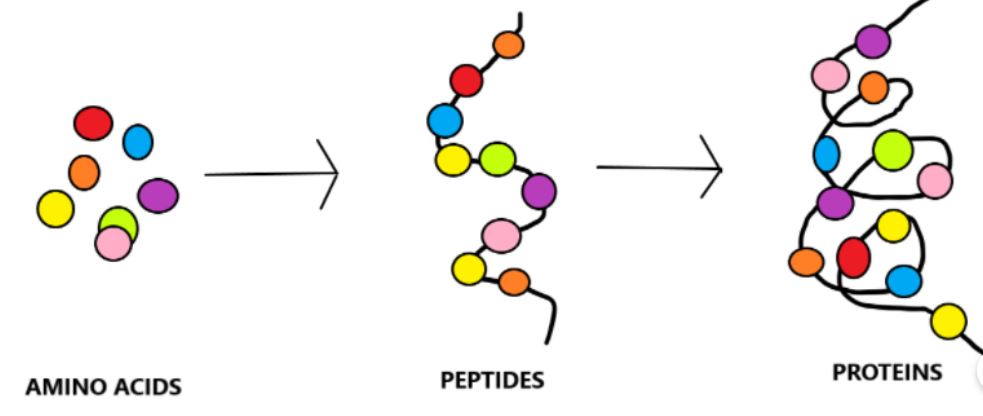
See a graphic below for you to understand it easily.

The Blocks (Monomers): Diagrams like Frontiers for Young Minds use the literal Lego tower analogy. Each colorful, individual brick represents a different amino acid.
The Chain (Peptides): When those individual blocks link together, they create a long chain called a peptide or a polypeptide.
The Final Structure (Protein): To become a functional protein, that long chain doesn’t just stay flat; it loops, bends, and folds tightly into a complex 3D shape
Amino Acids: The individual blocks. (1 single unit)
Peptides: Typically consist of 2 to 50 amino acids linked together in a short chain.
Proteins: Long chains containing more than 50 amino acids (often hundreds or thousands) that fold into complex 3D shapes
In short, your body breaks large dietary proteins down into small peptides and individual amino acids during digestion so they can easily float through your bloodstream and get to work!
How much protein does a child need in New Jersey
U.S. Department of Health and Human Services Secretary Robert F. Kennedy, Jr. and U.S. Department of Agriculture Secretary Brooke Rollins today released the Dietary Guidelines for Americans, 2025–2030
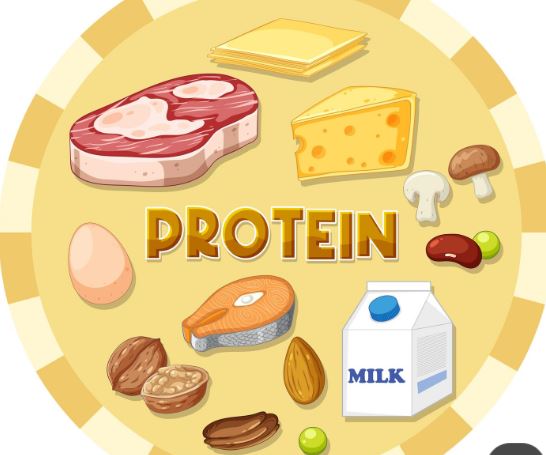
- Prioritize protein at every meal
- Consume full-fat dairy with no added sugars
- Eat vegetables and fruits throughout the day, focusing on whole forms
- Incorporate healthy fats from whole foods such as meats, seafood, eggs, nuts, seeds, olives, and avocados
- Focus on whole grains, while sharply reducing refined carbohydrates
- Limit highly processed foods, added sugars, and artificial additives
- Eat the right amount for you, based on age, sex, size, and activity level
- Choose water and unsweetened beverages to support hydration
- Limit alcohol consumption for better overall health
To be honest your protein intake varies on the level of activity, height, weight and gender in New Jersey! However, there is such thing as baseline, sweet spot, and optimal amount.
Toddlers (1–3 years old)
Sedentary/resting – 13 grams / day
Moderately Active – 5 to 18 grams / day
Highly Active – 19 to 22 grams / day
Young Kids (4–8 years old)
Sedentary/resting – 19 grams / day
Moderately Active – 22 to 26 grams / day
Highly Active – 27 to 32 grams / day
Older Kids (9–13 years old)
Sedentary/resting – 34 grams / day
Moderately Active – 38 to 45 grams / day
Highly Active – 46 to 55 grams / day
Teens (Girls) (14–18 years old)
Sedentary/resting – 46 grams / day
Moderately Active – 52 to 60 grams / day
Highly Active – 61 to 75 grams / day
Teens (Boys)(14–18 years old)
Sedentary/resting – 52 grams / day
Moderately Active – 60 to 70 grams / day
Highly Active – 71 to 85 grams / day
Late Teens (Ages 17–19)
Sedentary/resting – 53 – 56 grams / day
Moderately Active – 74 – 87 grams / day
Highly Active – 100 – 124 grams / day
Young Adults (Ages 20–25)
Sedentary/resting – 56 – 60 grams / day
Moderately Active – 84 – 98 grams / day
Highly Active – 112 – 140 grams / day
Protein Intake Calculator for kids
USDA calculator instantly outputs a comprehensive report detailing the exact macronutrient targets (including protein in grams), daily caloric targets, and water and vitamin benchmarks required for that specific body blueprint!
TIPS AND WARNINGS:
- For your peace of mind go to any urgent care near you and ask for consultation on how much protein you need daily! No calculator can match the accuracy of the doctor.
- Protein is a must whether you like it or not it builds your body whatever age groups you belong!
- As you grow older you need more protein to preserve your body.
✨ Have questions about this article?
Our AI Assistant can instantly help you find the closest open location, check service details, coordinate a walk-in visit, and answer basic symptoms.
Please note: We strictly avoid diagnosing online so our doctors can provide accurate, safe care in person.